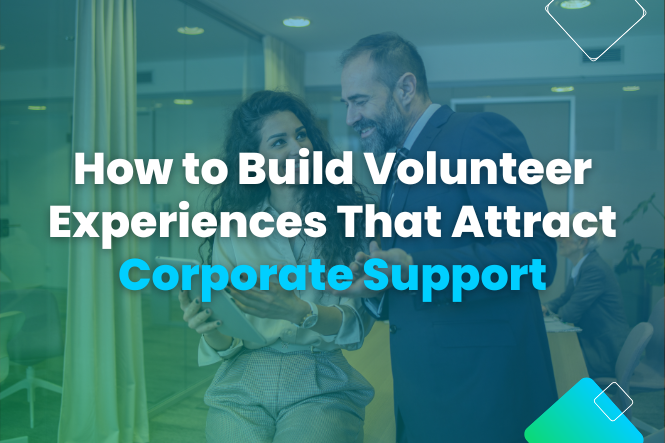
How to Build Volunteer Experiences That Attract Corporate Support
January 15, 2026 | 9 min read
Key Takeaways:
- Companies approach volunteering with specific goals, timelines, and capacity limits, and nonprofits that understand this are more likely to secure long-term support.
- Well-structured volunteer programs signal credibility and make it easier for companies to engage employees meaningfully.
- Volunteers often act as bridges to corporate partnerships when nonprofits understand where they work and how their companies give back.
- Clear communication, simple participation, and visible impact increase the likelihood that volunteer engagement leads to ongoing donations.
Leveraging volunteer opportunities is a strong entry point for nonprofits to engage corporate partnerships. These events are a powerful way to attract new donors while positioning themselves as a strong partner for business. As employers focus more on employee engagement, retention, and purpose-driven work, nonprofits that offer well-structured volunteer experiences position themselves as an attractive organization to work with. When volunteer programs align with both mission impact and corporate realities, they create long-term value for everyone involved.
Volunteer events are a great way for people to learn more about the nonprofit’s work, understand what it’s working to accomplish, and see its impact firsthand. These events help participants understand the need the nonprofit is addressing and how their ongoing support–both time and financial–is instrumental in supporting the nonprofit’s goals. During these events, fundraisers should identify the corporate decision-makers in the room and build relationships to expand the partnership further.
Firsthand experience can reframe the nonprofit’s mission as a shared vision with volunteers. When people are actively involved in the nonprofit’s work, they are more likely to continue offering their time. They may eventually become regular donors because they understand the tangible benefits of their ongoing support.
One way to develop a solid volunteer base is to establish relationships with local businesses and offer volunteer events for their employees. For companies, volunteer programs aren’t just about giving back. They’re often tied to specific seasons, internal goals, and employee engagement strategies. HR and CSR teams are balancing limited time, budgets, and employee capacity. Nonprofits that understand this and design volunteer opportunities accordingly stand out as partners who are easy to say yes to.
Here are eleven ways to structure volunteer opportunities that support your mission while making your organization more attractive for companies to engage with and support long-term:
- Educate volunteers: Infusing educational components into volunteer programs can help further participants’ understanding of the nonprofit’s mission and why it’s essential to continue working toward a solution. Including educational information in follow-up communications with volunteers is a great way to educate and direct them to additional resources. This information can help people understand the importance of the work the nonprofit is doing and why financial contributions are essential to the nonprofit’s success.
- Corporate Prospecting: Sometimes, a nonprofit’s biggest advocates are its volunteers. If a fundraiser knows a volunteer is still in the workforce, they can explore whether the nonprofit’s volunteer opportunities align with that company’s engagement goals or giving calendar. Do some detective work, search for the volunteers on LinkedIn or the company webpage to find the decision-makers in the group. This insight helps nonprofits structure opportunities that fit the business needs, rather than pitching one-off ideas.
- Host corporate volunteer events: Offering businesses well-structured, targeted volunteer opportunities that support their needs and goals can open doors to other forms of support, including grants or employee-corporate matching gift programs. Consider timing events around common corporate engagement windows, such as company-wide service days or slower business cycles, to increase participation and long-term interest.
- Create profiles on workplace-giving platforms: Almost 27 million Americans have access to workplace-giving programs where employees select a nonprofit to allocate a portion of their paychecks to. When a nonprofit enrolls in these platforms, like Blackbaud Verified Network, it is visible to employees who are actively looking for a cause to support. Even better, these programs often offer a company match, which means the nonprofit can receive double or even triple the employee’s original donation. These workplace-giving platforms often provide resources to help fundraisers create volunteer events with companies. When fundraisers integrate these platforms into their regular workflow, they can continue to leverage current relationships and identify new opportunities to connect with generous donors.
- Showcase the importance of donations: During volunteer sessions, fundraisers should highlight why, in addition to volunteering, donations are essential to achieving their mission. Showcasing how the community will benefit from their monetary support, the long-term implications on the group they serve, the lives they will change, and the programs they will fund will help people understand the impact donations can have.
- Encourage volunteers to stay in the loop: During volunteer events, fundraisers should encourage people to sign up for newsletters, volunteer again, and follow them on social media. Ensuring a steady stream of communication to people who already support the nonprofit can help them stay informed about news and donation opportunities. When volunteers see regular updates, they are more likely to donate because they recognize the nonprofit’s value and the importance of supporting its cause.
- Frictionless: Donors value simplicity and clarity. Clear calls to action, easy sign-ups, and straightforward donation options reduce friction for employees who may be engaging for the first time during a limited volunteer window.
- Focus on the story: Storytelling is essential to a nonprofit’s fundraising efforts. Showcasing the heart story behind a nonprofit’s work can be the deciding factor in whether or not a person donates. Sharing real stories of people who have been impacted by the nonprofit’s work can demonstrate the nonprofit’s effectiveness while also highlighting the importance of donations to continue making progress toward its mission.
- Send updates: To develop an ongoing relationship with volunteers, fundraisers should maintain open lines of communication. Updating supporters on progress, milestones, the impact of their support, and the importance of donations can go a long way toward showcasing the value of the nonprofit’s work. Maintaining a steady flow of communication will continue to highlight the critical ways the nonprofit supports the community.
- Personalized outreach: Conduct personalized outreach to volunteers, with specific messaging tailored to their personal history with the nonprofit. A targeted approach and segmenting email outreach lists into groups can help improve donation requests.
- Thank them: Every volunteer and donor should receive a thank-you and an impact recap, ideally within two days of the event. Showcasing gratitude and reporting on progress are vital strategies for fostering relationships with the people who support the nonprofit and its mission. When supporters understand their work is appreciated and what their contributions helped to accomplish, they are more likely to continue or expand their support. This is also an excellent opportunity to segway into a discussion for year-round partnerships.
By focusing on what makes their organization easy and valuable for companies to work with, nonprofits can turn volunteer engagement into a long-term growth strategy. Understanding corporate seasonality, employee engagement goals, and internal constraints allows fundraisers to design volunteer experiences that resonate beyond a single event. When nonprofits lead with structure, clarity, and impact, they position themselves as trusted partners and can strengthen relationships, increase donations, and advance their mission.
For more information about Blackbaud Verified Network or to sign up, visit https://nonprofit.yourcause.com/login/create-account.
Ready to promote your nonprofit to over 8 million potential donors with access to a workplace giving program? Sign up for Blackbaud Verified Network and read tips on how to use AI to reach more donors, how to connect with Gen Z donors, and other free resources on our blog. It’s time to unlock a new era of corporate support for your organization!
Follow The Blackbaud Giving Fund on LinkedIn, Facebook, and Instagram for updates, news, and more.